

“A dangerous book will always be in danger from those it threatens with the demand that they question their assumptions. They’d rather hang on to the assumptions and ban the book.”–Ursula K Le Guin, The Wave in the Mind: Talks and Essays on the Writer, the Reader and the Imagination
Today is the final day of Banned Books Week, the American Library Association’s yearly celebration of the freedom to read and those who defend it. In past years, I’ve found that when I talk about censorship and intellectual freedom in the United States folks often respond with disbelief and heavy doses of American Exceptionalism.
“Does that still happen? In this country?”
Admittedly, most schools don’t teach the history of domestic censorship beyond The Sedition Act of 1798, the Office of War Information during WWII, and maybe the blacklists of the Cold War era. This paints a limited picture of what censorship can look like and gives little insight into contemporary discussions of censorship. For this reason, we decided to celebrate the end of Banned Books Week with a series of articles on the history of book censorship in the US. This post will focus on censorship from the Civil War through World War II.
Now onto the history!
Reading in the Confederacy
Many scholars claim that the anti-slavery novel Uncle Tom’s Cabin by Harriet Beecher Stowe was the first book to be formally censored in the US. While the novel did help popularize many enduring stereotypes about black people, it also became an international best-seller that galvanized support for the abolitionist movement.
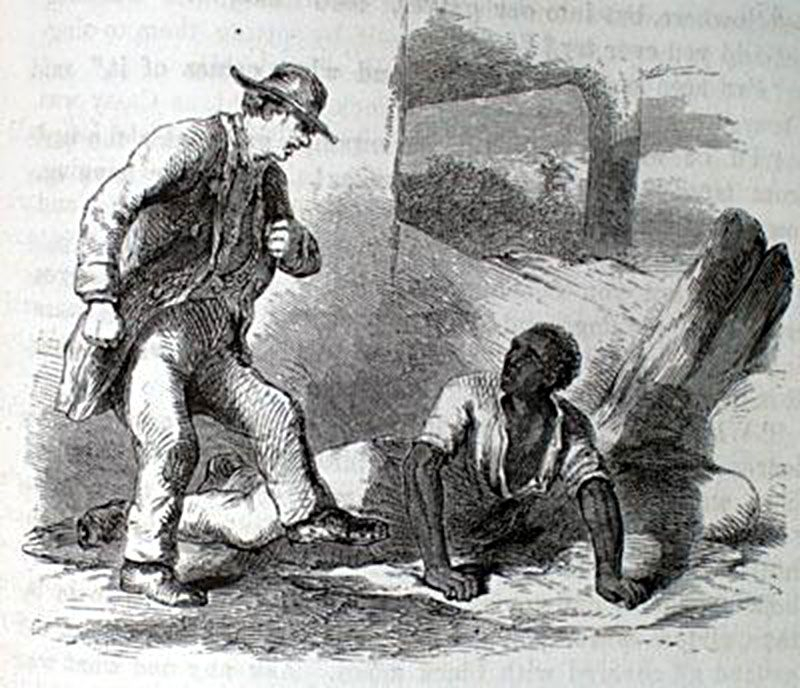
White slave owners argued that Stowe had cherry-picked the worst examples of slavery and fought back against Stowe’s novel in two ways. First, prominent southern writers published and circulculated more than 30 anti-Tom novels throughout the South. These propaganda books presented an idealized version of slavery, one in which childlike black slaves were grateful for the guidance and mercy of their white masters. Stowe in turn responded by releasing The Key to Uncle Tom’s Cabin in 1853 that documented many real-life cases of suffering and abuse that had (supposedly) inspired her to write the original novel. However most experts agree that Stowe did not encounter many of the sources she cites in The Key until after publishing the novel.
During the Civil War, the book was legally banned throughout the Confederacy. In fact, one bookseller from Mobile, Alabama was literally chased out of town for selling copies of the novel. While this ban ended when the Union won the war, it did inspire Russia to censor the novel well into the 1940s.
Comstockery
After the war, Union army veteran Anthony Comstock founded the New York Society for the Suppression of Vice (NYSSV) and began campaigning against ‘obscene’ acts and material. New York state quickly chartered the NYSSV granting its agents the power of search, seizure, and arrest. Then in 1873, Congress passed the Comstock Act, which restricted access to abortion, contraceptives, and information about sexual health. These laws also made it illegal to send any “obscene, lewd, or lascivious” material through the mail.
If you think that “obscene, lewd, or lascivious” is a rather vague standard, you’re absolutely correct. Many works that were considered literary classics by the late 19th century such as Aristophanes’s Lysistrata and Chaucer’s Canterbury Tales were deemed obscene as were contemporary authors like Victor Hugo, Oscar Wilde, Ernest Hemmingway, James Joyce, William Faulkner, and F Scott Fitzgerald. By the time the NYSSV was disbanded in 1950, Comstock and his successor John Sumner were responsible for over 5,500 arrests and the confiscation of nearly 400,000 books.

The United States vs One Book Called Ulysses
While the NYSSV endured for several decades, the Comstock laws that they had campaigned for were slowly eroded in the courts. One of the most important cases with regards to book banning was The United States v. One Book Called Ulysses in 1932, which served as Random House’s test case for challenging de facto bans throughout the country.
At the time of the case, Ulysses was formally banned in some capacity in every English speaking nation. The copies that were in circulation, and there were many, had been published in Paris, bound as The Complete Works of Shakespeare, and shipped to individual buyers around the world. This whole scheme was masterminded not by Joyce but by Sylvia Beach, the owner of an English-language bookstore in Paris that still stands today (pictured below).

The United States vs One Book Called Ulysses and its appeal in the Second Circuit are two of those few truly bizarre and entertaining pieces of US legal history. In the end, Judge John M Woolsey ruled that “whilst in many places the effect of Ulysses on the reader undoubtedly is somewhat emetic, nowhere does it tend to be an aphrodisiac”, and within minutes of the ruling, Random House ordered typesetters to start on an American edition of the text. The case didn’t end censorship as much as it changed the way texts were evaluated for obscenity through the federal post office. Future courts would have to consider the artistic merit of a work and its effect on an average, contemporary adult before labeling it as pornographic. In short, the post office would only confiscate material that was actually sexy, rather than just about sex.
The Grapes of Wrath and the Library Bill of Rights
Needless to say, censorship didn’t die with the erosion and repeal of Comstock laws across the country. In 1939, powerful farmer’s organizations in California sought to have John Steinbeck’s novel The Grapes of Wrath removed from schools and public libraries throughout the state. Landowning Californians took issue with the novel’s depiction of class tensions between wealthy farmers and poor migrant workers who had been displaced by drought and the Dust Bowl of the 1920s.
These pressure groups successfully removed Steinbeck’s novel from schools and public libraries throughout the state. The ban lasted two years before being overturned, but during that time, powerful landowners like Bill Camp the head of the Associated Farmers of Kern County photographed their workers burning copies of the book in order to publicize their support of the ban (pictured below).

There was significant opposition to the ban by civil rights groups and the American Library Association (ALA). Kern County librarian Gretchen Knief Schenk risked her career in order to speak out against censorship in a series of letters to the Board of Supervisors. In these letters, she warns of European fascism taking root in America and emphasizes the futility of banning books writing that “If Steinbeck has written the truth, that truth will survive.” Her ideas were a major influence on the American Library Association’s Library Bill of Rights adopted the same year.

Censorship and Propaganda During WWII
If the overturn of California’s ban on Steinbeck’s The Grapes of Wrath represented progress for First Amendment activists, that progress was quickly challenged by the United States’s entry into WWII. The war left the country in a difficult position with regards to censorship. On one hand, the country needed to demonstrate the superiority of democracy over fascism if it were to launch a massive war effort against it. On the other hand, some amount of censorship is necessary during war to keep morale up and to protect state secrets.
On the home front, most newspapers, radio broadcasts, and cinema newsreels voluntarily adopted the “Code of Wartime Practices for the American Press” issued on January 15, 1942 by the Office of War Information. These guidelines provided strict rules for journalists that stressed secrecy, optimism and patriotism. Meanwhile, Americans on the homefront were closely surveilled and bombarded with government propaganda.
Censorship on the homefront was less severe. When the US first entered the war, American librarians began the Victory Book Campaign collecting books to send to soldiers abroad as a part of the “war of ideas” against fascism. Then, in 1943, the War Department took over this operation paying publishers to produce thousands of cheap, lightweight volumes that could be easily shipped overseas. At home, Congress rushed to produce the Soldier Voting Bill ahead of the 1944 election, and Senator Robert A Taft added an amendment to the bill that prohibited the federal government from sending overtly political material to troops, including books. However, before the ban could be officially enacted, American journalists reported that Taft had admitted that the ban was a political ploy to disenfranchise soldiers during a meeting with high ranking military officials, the public quickly turned on him, and the amendment was removed.

Thanks for reading! I hope this little history was interesting and informative. Be sure to check out part 2, which covers censorship from the Cold War to the modern era. As always, feel free to share your thoughts in the comments and on social media, Olive Tree Books-n-Voices on Facebook and @_olivetreebooks on Twitter.
Posted on
Leave a Reply
You must be logged in to post a comment.